
Ramen
Tantanmen
担々麺
Creamy soy milk broth with sesame-rich tare, house-made chilli oil, and seasoned ground pork — or tofu.
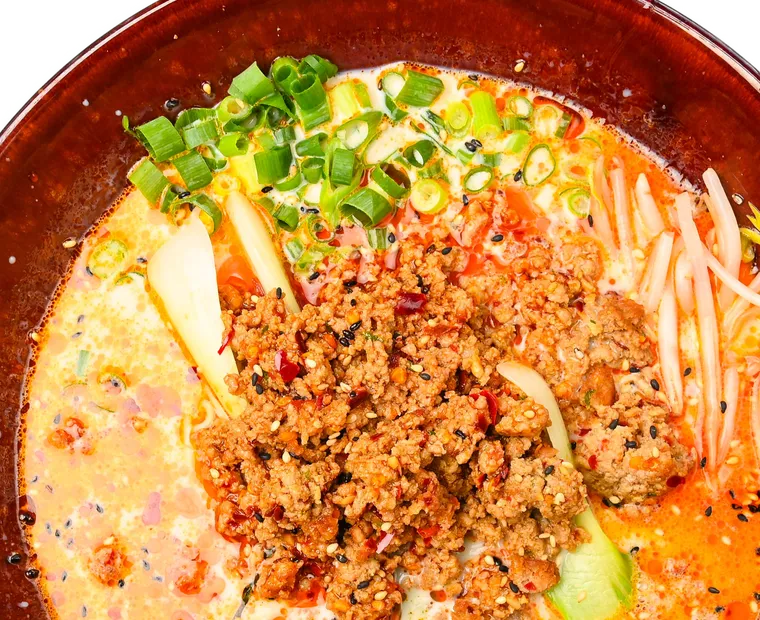
Tantanmen (担々麺) is not originally a Japanese dish — it comes from Chinese Sichuan cuisine, where it’s known as a spicy street noodle soup. In Japan it’s been adapted so heavily over the decades that the Japanese version now barely resembles the original: creamier, milder, heavier on sesame. And somehow addictive.
The Broth
The base isn’t chicken or pork broth — it’s a blend of soy milk, soy sauce, Kombu, and water. That makes it lightly sweet, creamy, and unusual for anyone who mainly knows ramen from clear broths or Tonkotsu. But the character doesn’t come from the broth alone — the tare is what really counts.
The Tare
Our tantan tare is sesame-forward. The base: roasted white sesame, freshly ground, and sesame paste. Add to that sesame oil, a combination of miso pastes, a fermented chilli bean paste for heat and depth, and our house-made chilli oil with dried chillies. Shoyu brings it all together.
The result is a paste that’s simultaneously nutty, savoury, lightly sweet, and spicy — and difficult to describe in a single word.
The Topping
On top goes seasoned ground pork. If you’d rather skip the meat: there’s a vegan version with tofu, also made with our tantan tare. The fact that we can offer a fully worthwhile vegan alternative at all is not something to take for granted — how tricky that is in Japanese cooking is explained pretty well by the story behind our Veggie Miso.
The First Spoonful
With the first spoonful you sometimes wonder what exactly you’re eating. The second doesn’t necessarily make it clearer. By the third you start to pick out the individual flavours — the sesame, the heat, the sweetness of the soy milk. By the fourth, you’re gone.
We have guests who found the broth really unusual the first time around and now order nothing else. That pretty much says it all.
On the topic of spice: The “mildly spicy” rating comes from my wife — as someone who’s half Chinese, half Japanese, perhaps not the most neutral reference point for Central European spice tolerance. If it’s too much: just say the word, we’re happy to bring extra broth to balance it out. You’ll find more on allergens and intolerances in our Coco Guide.