Ramen
Tori Shoyu Ramen
鶏醤油ラーメン
Clear corn-fed chicken broth, house-made shoyu tare, and natural umami from Katsuobushi and Kombu.
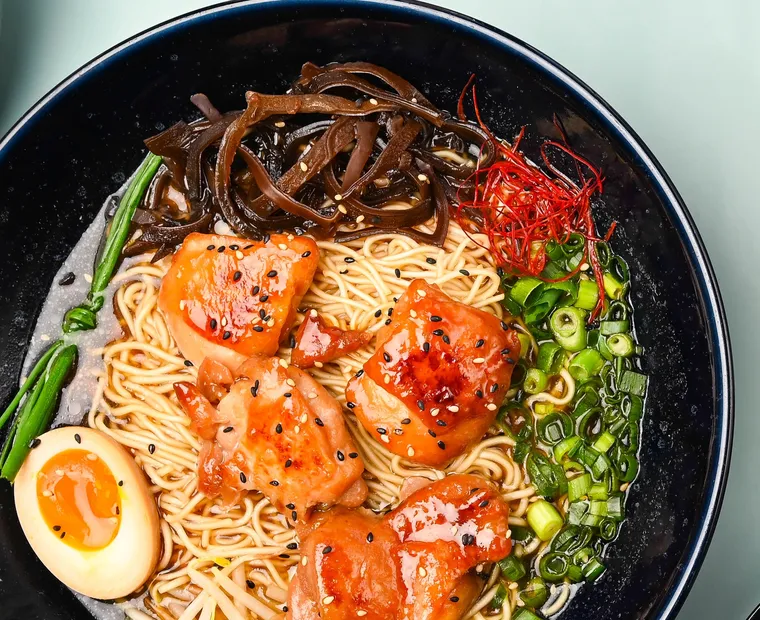
Tori Shoyu is the most common style of ramen in Tokyo. The name says it all: Tori means chicken in Japanese, Shoyu is soy sauce.
Don’t worry though — we’re not just pouring random soy sauce into your bowl. There’s a bit more to it than that.
The Broth
The base is a corn-fed chicken broth, cooked fresh every day: clear, clean, made exclusively from corn-fed chickens — and simmered for at least four hours daily. We don’t use any ready-made products. Everything is made from scratch, from the broth to the toppings.
A quick note: the concept of “corn-fed chicken” doesn’t really exist in Japan — it’s more of a German and French thing. The corn feed gives the meat more fat and more aromatic fatty acids, which genuinely adds depth and body to the broth.
Dashi
One of the central building blocks of Japanese cooking is dashi — a stock that carries the characteristic umami flavour. Ours is made from two ingredients: Katsuobushi and Kombu.
Katsuobushi are dried, smoked bonito flakes — bonito belongs to the mackerel and tuna family. Kombu is an edible seaweed harvested mainly off the coast of Hokkaido, where cold seawater creates ideal conditions.
We steep both overnight. No powder, no instant dashi — just the right ingredients and time. How we solve this without fish, you can read in the story behind our Veggie Miso.
Shoyu from Kyushu
Then there’s the soy sauce itself. We use several varieties of shoyu from Kyushu, the southernmost of Japan’s four main islands. Kyushu is known for its soy sauce — around 300 small producers make it there. Compared to other regions, it’s noticeably sweeter, which has historical roots: Kyushu was once the entry point for sugar into Japan, and locals quickly discovered that sweetness works well with fish and meat. That preference shapes the regional cuisine to this day.
It’s all rounded off with brown sugar from Okinawa — well known in Japanese cooking for its intense flavour.
The Teriyaki Chicken
The tender teriyaki chicken on top is probably the quiet star of the bowl. No bottled sauce, no marinade from a jar — the teriyaki sauce is made fresh in the pan from various ingredients, through slow reduction and caramelisation of the sugar. We prepare the chicken as fresh as possible and don’t batch-cook large quantities in advance — it dries out, and that would be a waste. So if you have a little patience: it’s worth it.